It may or may not surprise you to know that in my spare time, I sometimes watch Korean dramas. One of the first ones I ever watched was called Coffee Prince, a delightful drama involving a woman posing as a man to get work first as her boss’ fake boyfriend, and then as an employee at his start-up café. (It’s on Netflix and Viki–it’s a fun drama and I recommend it!)
The promotional poster for Coffee Prince, a 2007 KDrama. The poster shows the 6 main characters who work in the coffee shop, all in black and white uniforms gathered around the café counter.
The soundtrack for that drama is among the best I’ve heard in ANY kdrama! Most of them have one or two songs they play constantly for every single plot point, but this one had a wide range of music throughout the series. It was on that soundtrack that I first heard Clazziquai Project (also known as Clazziquai), a group whose music is difficult to shoehorn into any one genre but spans across electronic music, acid jazz, pop, and house. Clazziquai includes composer/lyricist DJ Clazzi, singer Horan, and Korean Canadian singer Alex Chu.
Today’s Music Monday track, “Tell Yourself,” never fails to get me grooving, with an energy I need on most Monday mornings (well, most mornings these days, to be honest). The music video caught my eye years ago when YouTube was my most used form of music streaming–it’s a compelling visual journey.
Enjoy this morning’s track!
Clazziquai Project’s music video for the song, “Tell Yourself.” It’s hard to describe visually, but it involves singers Horan and Alex, plus unofficial member Christina (Alex’s sister), in a work environment. They interact with various small objects (like a tiny microphone, telephone, etc.) and have different heads/bodies/legs, kind of like what you might see on a photo opportunity standee.
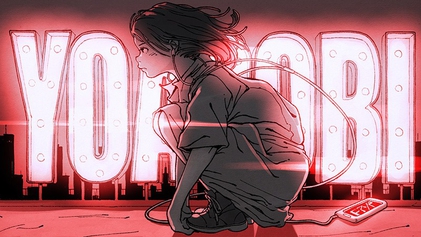
A black and red banner that says “YOASOBI” with an anime-style girl in front of the word
YOASOBI is a duo of two Japanese artists: Ayase, a Vocaloid creator (according to his Twitter) and Ikuta Lilas, a singer-songwriter who goes by the stage name Ikura in YOASOBI. The two came together under the name YOASOBI (夜遊び) meaning “nightlife,” to mark the difference between their daytime solo careers and nighttime career as YOASOBI. (Disclaimer: most of my information is coming from their Wikipedia article because I can’t read Japanese and it seems to be the only English-language source!)
I first came across YOASOBI through Twitter and a delightful video timed to the song. I can’t find the original tweet now, but it became a meme:
A tweet that reads, “Japanese Songs: *Sings About Depression And Suicide* Me Who Doesn’t Even Understand Japanese:” followed by a delightful video of people dancing joyously to a YOASOBI song. I can never watch the video just once.
Today’s Music Monday song is the first song ever released by the duo, “Yoru ni Kakeru,” which was based on a short story by Hoshino Mayo (Wikipedia). The story and resulting music video are quite dark, and yet the song itself is so upbeat and catchy! The contrast between the subject matter and the music is striking. Luckily I do not understand Japanese at all, so I can conveniently ignore that part and enjoy the song. (But if you are curious, the official music video for the song is available on YouTube behind an age restriction wall and there are some helpful commenters who translate/explain the full story.)
YOASOBI’s debut song became immensely popular, topping the Billboard Japan Hot 100 for three consecutive weeks and finishing out 2020 at the top of the list. Incredibly, it was the first non-CD single ever to top the year-end chart. (Wikipedia)
After finding them through Twitter, I listened to the entire album and subsequent EP release as well, and do so almost every single day. There are no songs on either album that I ever skip–each one is a banger! The albums are so energetic that I actually listen to them during my commute and/or while working, to keep my own spirits high (despite the bleak subject matter of this particular song!).
Usually I don’t feel that the single a group chooses for release are ever the best on an album, but in this case I do think this is the standout track. Hope you all enjoy an energetic start to the week!
“Yoru ni Kakeru,” from YOASOBI’s EP The Book (2021)
In a previous post, I alluded to my hobby of playing farming simulation video games. I cannot emphasize enough how much I enjoy this pastime. The thrill of planting seasonal seeds and watching them slowly grow into fruits and vegetables (with no chance of me killing any real live plants); the exhilaration of finally having animals and pets that produce dairy, wool, and other sundries; the delight of courting the town bachelor/ettes; the elation upon finally being able to purchase the 198,000,000G house that serves no purpose other than to say I did it… there is nothing else that can compare.
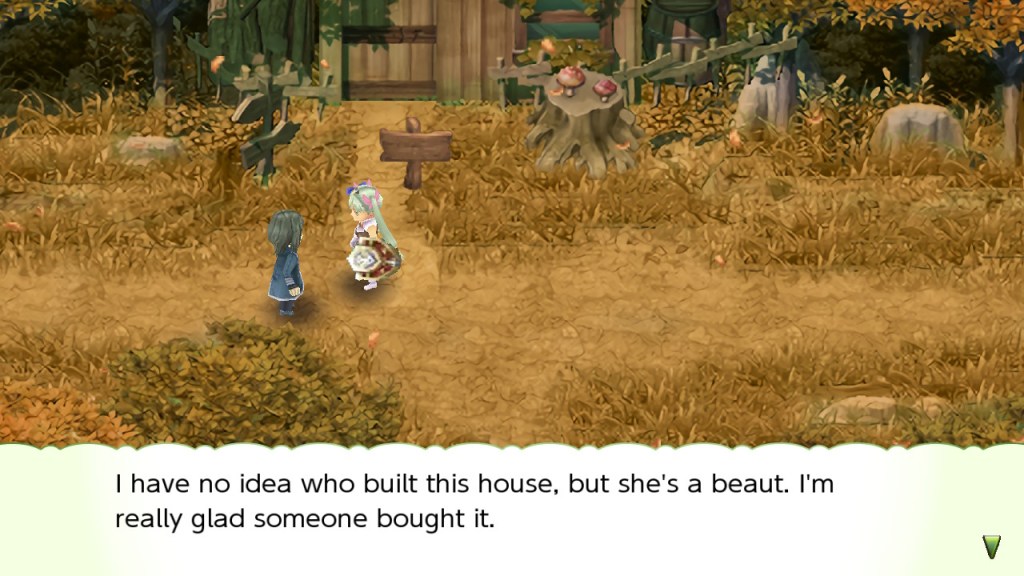
A screenshot from my current farming sim of choice, Rune Factory 4 Special, taken immediately after I purchased the useless 198,000,000G house. The real estate agent says, “I have no idea who built this house, but she’s a beaut. I’m really glad someone bought it.”
In my current farming sim of choice, my daily routine of late starts like this:
6:00am: Wake up to my in-game husband,
who gives me the lunch he’s made for me and tells me to be home early (Leon, we both know that’s not happening)
6:10 – 6:45am:Make as many dishes as I can before depleting all my energy
to keep my fridge from overflowing and make some of that precious G
6:45am – 4:00pm: Brush and give all 62 of my monster pets gifts
*RECORD SCRATCH*
“Wait,” you must be thinking. “You don’t really brush and give gifts to 62 monster pets every single day, right? I mean, that takes up most of your day!”
Yes, I really do brush and give gifts to all 62 of my monster pets every single day.
Well, I did, up until yesterday (real-life yesterday, not in-game yesterday).
It started out small, as most things do. I just had 2 sheep and 2 chicken monsters at the beginning. Brushing all 4 of them took no time at all. And then I got 2 cow monsters, 1 bull monster, and an apple monster. Okay, so my little monster family grew a little, but it still didn’t take more than an hour of my day.
As I progressed through the game and caught more and more monsters though, suddenly I found myself grinding through up to 9 in-game hours of brushing and gift time. I had little time left in the day to do the things I wanted to do: adventuring in dungeons, gallivanting around town with my in-game husband, even watering and planting my crops were starting to take a backseat to this daily habit.
Another screenshot from RF4S. A sentient mailbox named Eliza is saying, “Wow, you’ve befriended so many monsters! You’re like a snake charmer, only…for everything!”
Yesterday, I finally tried just… not brushing and giving gifts to all my 62 monsters. Suddenly, I had back so many hours of my day. I was able to go adventuring in dungeons before 9pm. I wandered around town and attended yet another pajama party (don’t even get me started on how many times I’ve been invited to those). I even gave birth to an in-game daughter with my newfound time!
A third screenshot from RF4S, taken immediately after my character gave birth. My in-game husband, a fox-like man named Leon holding a peacock fan, is saying to me, a woman with long green pigtails, “Our baby…looks kind of like a monkey.” What a poop!
Brushing all 62 monsters was never something I had to do. I did it in the beginning to build my relationships with them so they would work in my fields for me (I know how that sounds, but they enjoy it. Really!), and because my monsters liked it. But once I reached that goal, I just kept going with that habit, even though I didn’t need to anymore.
I know you’re not all farmers, or even farming sim players, but I bet there are things you’ve been doing that take up way more time than you wished. Maybe you’re doing it because it makes someone else happy, or because it made sense a long time ago and doesn’t anymore.
People talk about dropping the ball like it’s a bad thing. Is it really so terrible if the ball you’re dropping isn’t one that needs to be juggled at all? So many times we take on little tasks that we think of as no big deal, and before we know it they snowball into things that take up so much energy and time that we don’t have any time leftover for the things we really want to do.
I guarantee that you can find one thing in your life you’ve been carrying needlessly. What could you do if you stopped brushing your 62 monsters everyday?
Drop that ball, and you might be surprised to find just how much lighter your load is by taking one thing away.
One more screencap from RF4S, just for fun. Leon is facing away from me, saying “…Oh, dear. My image… my beautiful image…” after I caught him saying some embarrassingly sappy things to our baby and teased him about it.
In last week’s Music Monday, we heard a snippet of Francis Poulenc in George Shearing’s recording. Today, we’ll listen to the piece Shearing referenced in that recording!
Shearing took an excerpt from the third movement of Poulenc’s Trois mouvements perpétuels for his rendition of “On the Street Where You Live.” Shearing slowed it WAY down, so its character significantly differs from the fast-paced, jovial mood in the original.
What I find really interesting about Shearing’s reference is that he did not choose a section from the more recognizable parts of this movement; he excerpted a transitional section that appears only fleetingly. I can see why, though! It’s a magical moment where the colors and mood change in the blink of an eye, before returning to the light and airy main theme.
The main reason I was able to pick out this reference as I half-listened to the Shearing recording was because my best friend in college (hi, T!) played this suite. This piece really requires a person to make the entire suite sound effortless, like a jaunty stroll through the park, despite its many technical and interpretive challenges.
Something about Poulenc’s music has always resonated with me. His compositions have a singular sound about them, and I enjoy the dry humor sprinkled throughout so many of his works. Someday I’m sure I’ll write more about him.
For now, enjoy some Poulenc, performed by pianist Pascal Rogé, to start your week. See if you can pinpoint the excerpt Shearing used!
The third movement, “Alerte,” of Francis Poulenc’s Trois mouvements perpétuels, performed by Pascal Rogé. Recorded in 2002.
With skyrocketing gas prices and record inflation in the U.S. (the highest annual inflation rate since January 1982!), I recently realized I couldn’t put off raising my lesson prices anymore.
I have always been reluctant to raise my lesson prices. Nobody wants to tell their clients that the same service they’ve been receiving for years is suddenly going to cost a lot more; it’s just not a pleasant conversation for anybody! As I set about to reprice myself, I realized that the last time I had adjusted lesson prices was in 2016.
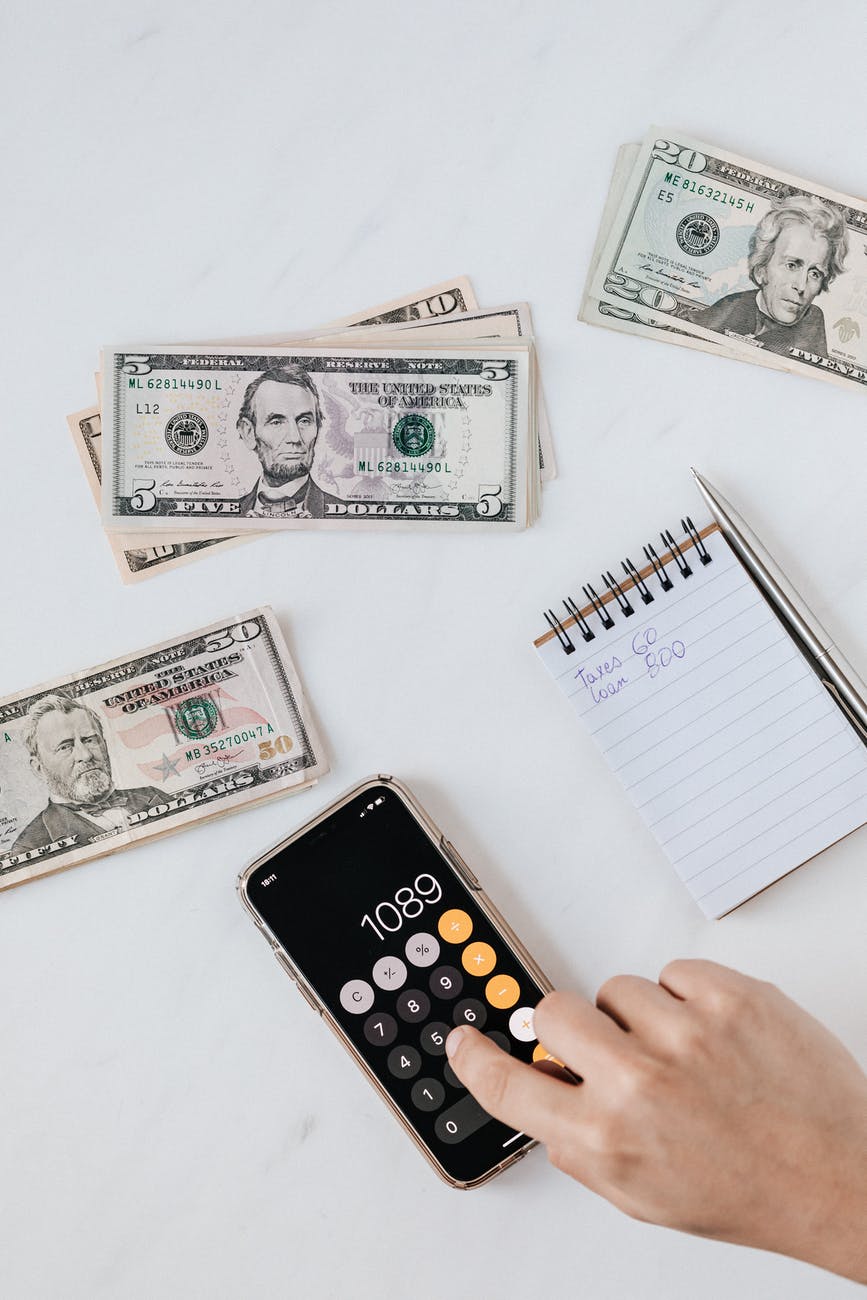
As I started calculating how much to increase my prices, I did some research and found out that the cumulative rate of inflation since 2016 is 18.2%.
EIGHTEEN. POINT. TWO. PERCENT.
Instead of giving myself a raise each year, I’ve effectively given myself a pay cut—leaving behind almost 1/5 more money that I could have been making. And even knowing that, along with the ridiculous economic situation unfolding around us, I still took days toiling over my calculations, with endless anxious thoughts swimming around in my head.
“Is it fair to ask my students to pay 18.2% more for lessons? How can I make this more palatable for them? What if they just find another teacher who charges less?”
I realized in the middle of this process that I was bending over backwards to avoid making a decision that would ultimately place significantly more value on my lessons, my time, and myself. The truth is, the reason I hated raising prices wasn’t because I wanted to avoid a conversation about raising prices (although that certainly isn’t fun).
I hated raising my prices because I hated valuing myself.
I hated having to be honest with myself about the value of my years of musical training and hours upon hours of practice. I hated having to acknowledge that I’m a good—some would even say outstanding—teacher. I hated giving myself credit for being a patient, compassionate, and fun educator. I hated having to come face-to-face with my own self-worth.
In a society that values hard sciences and mathematics over the arts, that puts a premium on productivity over reflection and relationship-building, it’s exceedingly difficult for me to feel like what I do—or even who I am—has any intrinsic value. Arts? Education? Compassion and patience? Who cares about any of that?
Well… as it turns out, I care. The whole reason I do what I do is because I believe in the arts. I believe that art can enrich lives. I believe that music can help people learn about and love themselves. I believe it because my students and their parents have told me how much joy lessons bring to them. I believe it because the arts have done that for me.
Patience and compassion are what all students—all people, really—need. The joy and fun I bring to lessons is what my students need. The kindness and mentorship I offer them is what I needed as a student.
And that should have value.
I should have value.
I still struggle daily with my sense of self-worth, but I’ll try to remind myself that what I do really does matter. What I do touches lives, whether I can admit it to myself or not. I’m GREAT at what I do. And the fact that I have the gift to do it well is worth its weight in gold.
I first heard George Shearing’s name when my jazz teacher in college suggested a bunch of jazz pianists for me to listen to. My teacher was actually a woodwind specialist and wanted me to hear some “real” pianists playing, since I was completely clueless about the genre at the time. He suggested Shearing because of his tendency to improvise using both hands (rather than just right) and to incorporate chordal blocks when playing melodies.
I never really carved out time to listen to any of the jazz pianists my teacher suggested when I was in college–too busy being a perpetually anxious Western classical pianist (but that’s a story for another post). Over the last few years I’ve made a conscious effort to listen to more jazz, especially as I’ve tried to work on my piano improvisation skills.
I was recently listening to George Shearing on shuffle and was startled to suddenly hear a piece by Poulenc. I actually thought Spotify had randomly switched to classical music until the Poulenc reference turned into “On the Street Where You Live”! (And I felt like a total nerd recognizing Poulenc when half-listening, just having it on in the background while working.)
So of course I got curious about Shearing, since I knew nothing about him except my dim memory from college jazz lessons. Born in London, Shearing was not only a pianist but also a composer of many jazz standards, including “Lullaby of Birdland” (!!!) and “Conception.” Blind from birth, by all accounts he had a wicked sense of humor, as exemplified by this story about his guide dog.
Having listened to more of his recordings, I must agree with the article that Shearing was an extraordinarily elegant jazz pianist. His ability to seamlessly incorporate references from all over European piano literature into improvisation is astounding, and even (especially!) on tracks without those references, his playing is as complex and graceful as can be.
Enjoy some Poulenc-inflected jazz this Music Monday!
George Shearing’s rendition of “On the Street Where You Live,” from The Shearing Piano album (2001)
I was first introduced to Melissa Polinar by a friend and fellow Filipino American musician who recommended her to me when I was still in academia studying Asian American YouTube musicians (a lifetime ago). My friend was absolutely right about her music–she’s a gifted songwriter not only with harmonic complexity but also with lyrical prowess. I’ve listened to her regularly ever since!
Fun fact: Prince once attended one of her shows in LA and seemed to have enjoyed her music (see her tweet below).
A tweet from Melissa Polinar sharing that Prince paid her the highest compliment, described in image form as a person making a face like something smells bad–a musicians’ way of showing what you played was SICK (in a good way)
Today’s Music Monday song, “Jenny,” isn’t what I consider representative of Melissa Polinar’s typical sound OR usual lyrical topics; however, it is achingly beautiful, heartbreaking, and hopeful all at once. It exemplifies her incredible range as a musician and as a songwriter.
Someday I’ll feature one of Melissa Polinar’s more upbeat, catchy tunes that make her music so fun to sing along to.
Enjoy this slower-paced track to start off the week!
“Jenny,” from Melissa Polinar’s 2017 album, “Rise at Eventide”
Hello friends! The most stressful part of the move is over, though things are still busy around here as I get settled into my new place. Life will always be busy though, so I’m planning some exciting things for Riffs on the Reg—starting with Music Mondays!
Every Monday, I’ll share a short post with a music recommendation. To kick us off, what else can we have besides “Manic Monday”?
I was surprised to learn a few years ago that “Manic Monday,” popularized by The Bangles, was actually written by Prince! The song was originally intended for the group Apollonia 6—one of several groups formed by Prince.
Here’s to wishing it was Sunday!
“Manic Monday,” written by Prince; recording released posthumously in 2019
Recently, as a way to help me through my workday, I’ve gotten really into podcasts (yes, I know I’m several to a dozen years late to this trend). Each day I listen to at least one podcast that addresses issues related to work, or that help me reframe my own approach to work.
11 days ago, I listened to an episode of The Happiness Lab centered around guilt. As a now-avid listener of several podcasts about work, it’s striking how much the concept of guilt comes up—especially around discussions of women in the workplace (it’s an especially frequent topic on the Women at Work podcast). Every single time the subject of guilt comes up on these podcasts, a small part of me slithers into a corner with dilated pupils, hissing upon being exposed to the harsh light of self-awareness.
On this episode of The Happiness Lab, what stuck with me was when host Dr. Laurie Santos said that there is literally (not figuratively) not enough time in a day for everything she wants to, or at least feels she should, do in a day. Part of me instinctively recoiled upon hearing that, but the other part heaved a gargantuan sigh of relief.
In my arrogant youth, I once wrote an entire diatribe about how people who say they “don’t have time” for things they wanted to do just didn’t prioritize their time right, and if they were just more disciplined they would be able to make time for the things they cared about. Upon reflection, it’s clear that my hubristic ideas about time allocation really just reflected the lack of compassion I extended to myself about how I spent my time, and my own desperate attachment to productivity as an outward expression of my worth.
The human brain really was not built to work and be productive as many hours a day as we are forced to be under capitalism. A standard workday is 8 hours, but consider all the small tasks we do at home that add up to consume an entire day: washing dishes, doing laundry, cooking meals, running errands… the list goes on and on.
Women and AFAB folks tend to fill their days with these kinds of tasks at a higher rate than men, and at the end of the day we are already spent without having done a single thing solely to nourish ourselves—and then we feel guilty about not spending quality time with loved ones or being more productive in other ways. Something always has to give.
There will never be enough time in a day to do all the things we have on our to-do lists. Somehow we always find more things we’re supposed to do, but what if we just… didn’t?
I started this blog with the intention of posting consistently once a week, and I haven’t been able to do that. I’ve felt guilty over the past week since I missed posting last Friday, and every single day since then. I’ve felt shame for not keeping my commitment on Twitter to go live on Monday. But right now I’m also dealing with a major project at work; moving into a new home; preparing for adoption of 2 kittens; staying afloat with my independent business; an ongoing global pandemic; chronic mental illness; and generally trying to stay alive.
At the end of the day, I can only do what I can do. I have to let some things fall to the wayside until I can pick them up again, when I have less on my plate and more in my cup. At the end of the day, I have to remind myself: there’s never enough time to do everything.
From time to time throughout my adulthood, I have had moments of crisis where I wondered what the hell I was doing with my life. When this has happened, it has always centered around my choice of career—never any of my personal life choices (though in all honesty, I probably should have questioned more of those).
In recent years I have come to understand how tight a grip capitalism has had on me, even to the extent of defining my identity by my profession. I’m far from alone in that; after all, one of the first questions people ask upon meeting is, “What do you do?” Despite this being an incredibly vague question with an almost infinite set of possible answers (I eat, I sleep, I obsessively play farming simulation video games) it is tacitly implied that what you do—the majority of your identity—hinges on your job. We often reply, “I’m an accountant,” I’m a musician,” “I work at a frozen yogurt store” without a second thought.
It is seldom that we truly think about the core of who we are beyond our careers, but for so many that identity can be gone in a flash. An unexpected health crisis forcing us into early retirement; a business failing; an industry collapsing; a global pandemic irrevocably changing the world’s economic landscape. If I were to strip away my job, how would I define myself? Who would I be without my career? What would I do if I didn’t have to spend almost all my waking hours being “productive”?
It wasn’t until this past year, really, that I began to truly accept that my work is not my worth. I am more than just the projects I manage, the deliverables I churn out, the hours spent editing manuscripts, the lessons I plan. I am a whole human, with needs and desires and dreams. I am an emotional being, who yearns to actually feel my feelings instead of squashing them down each day to be able to function as I clock in. I am a creative soul who needs to manifest, in writing or music or art, the figures that flit through my imagination and the thoughts that drift down the river of my consciousness.
So I say to myself, and to you, dear reader: You are more than your productivity. You are both less and more than you think you are—a small being in a vast universe; a giant in your loved ones’ eyes. You are the person your ancestors could not see, but loved even before you were born. You are the hopes and dreams that your inner child still holds dear.
Be the you who would exist without the weight of capitalism crushing your soul into coins. Unapologetically celebrate the person cowering in the shadows of your heart, waiting to come out and play. Revel in all that you are, and all that you are not.
And perhaps together, we can finally found out: who even are we?





 Riffs on the Reg